
Filament Overview
3 materials - temperatures, properties and recommendations for each filament
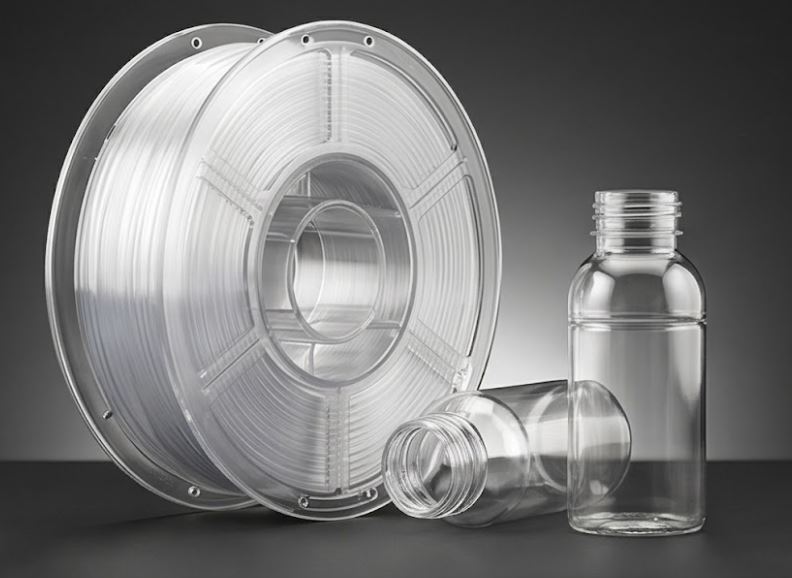
PETG - Polyethylene Terephthalate Glycol
Balanced material: easier than ABS, tougher and more heat-resistant than PLA.
PETG combines easier printing with better durability and heat resistance than PLA. Properties: - Prints around 230-250 C nozzle, 70-90 C bed - Better layer adhesion and impact resistance than PLA - Can be prone to stringing without proper tuning Best for: outdoor parts, brackets, functional components. Related: PLA, ABS, Stringing, Filament.
Open detail →Pros
- ✓Good durability and impact resistance
- ✓Higher heat resistance than PLA
- ✓Good chemical and moisture resistance
Cons
- ✗Can string without tuning
- ✗Needs better first-layer calibration than PLA
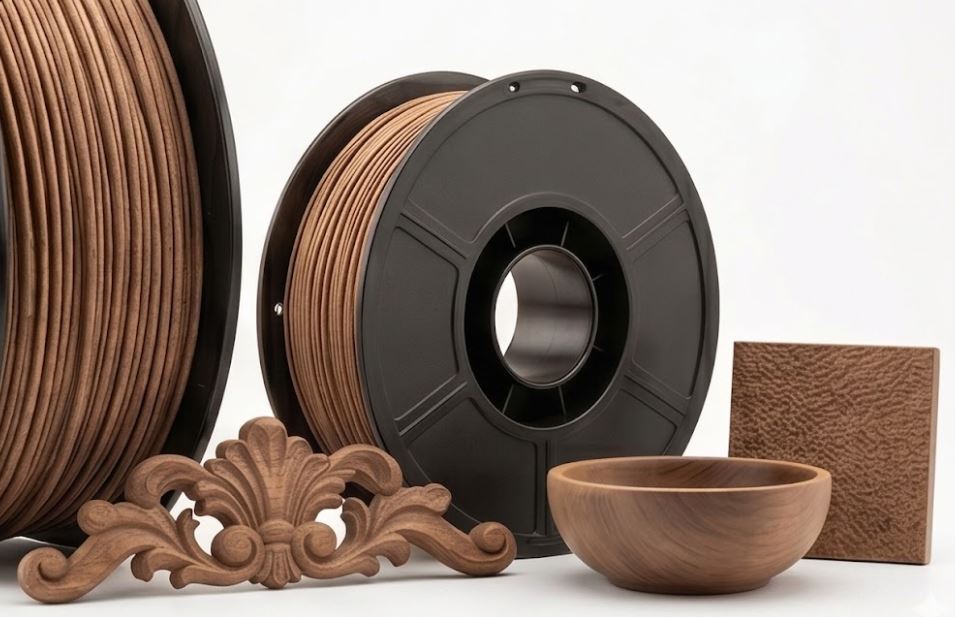
Wood Fill - Wood Composite Filament
Natural wood-like appearance and texture directly from the printer.
Wood-filled filaments (typically PLA blended with wood particles) create prints with a wood-like look, texture, and sanding potential. Properties: - Prints in PLA-like temperature ranges - Can be sanded and finished for realistic appearance - Particle-filled blends can increase nozzle clogging risk Best for: decor, display objects, props, and aesthetic models. Related: PLA, Nozzle Size, Filament.
Open detail →Pros
- ✓Natural wood-like visual style
- ✓Can be sanded and finished after printing
- ✓Great for decorative and presentation pieces
Cons
- ✗Higher clogging risk with fine nozzles
- ✗Lower mechanical strength than pure technical filaments
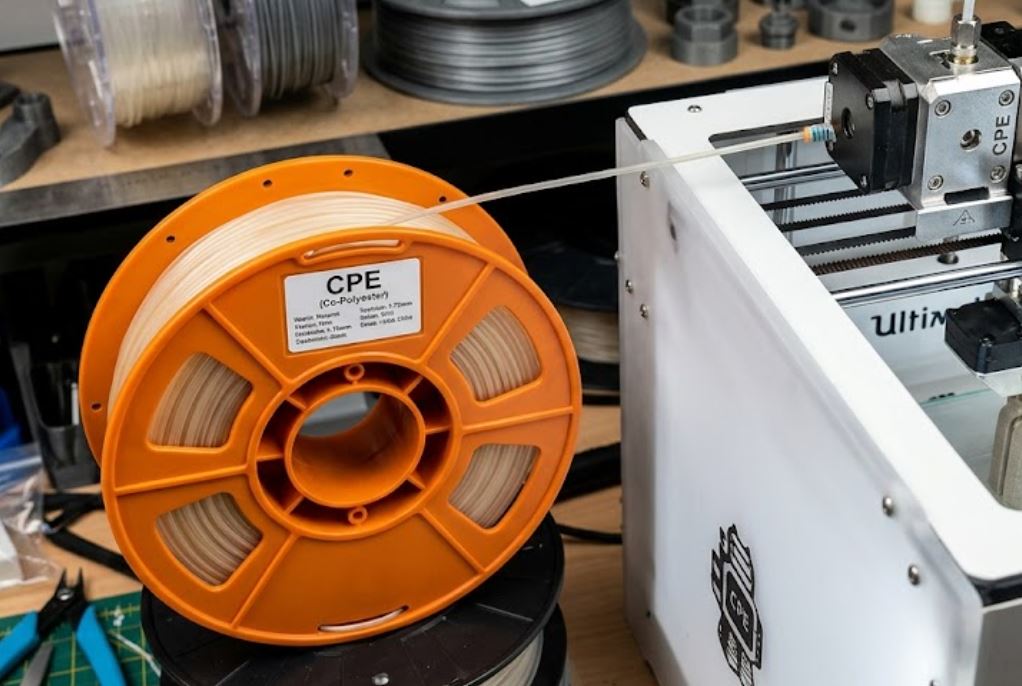
CPE - Co-Polyester
Technical polyester with strong chemical resistance and cleaner printing.
CPE is a technical co-polyester often seen as a higher-performance alternative to standard PETG in demanding use. Properties: - Better heat resistance than typical PETG - Good chemical resistance and dimensional stability - Usually less stringing than poorly tuned PETG profiles Best for: chemical-contact parts, warmer environments, transparent or technical covers. Related: PETG, Filament, Chemical Resistance.
Open detail →Pros
- ✓Improved heat resistance over many PETG profiles
- ✓Good chemical durability
- ✓Can print cleaner with reduced stringing when tuned
Cons
- ✗Usually costs more than standard PETG
- ✗Less common profiles and community tuning guides