
Filament Overview
7 materials - temperatures, properties and recommendations for each filament
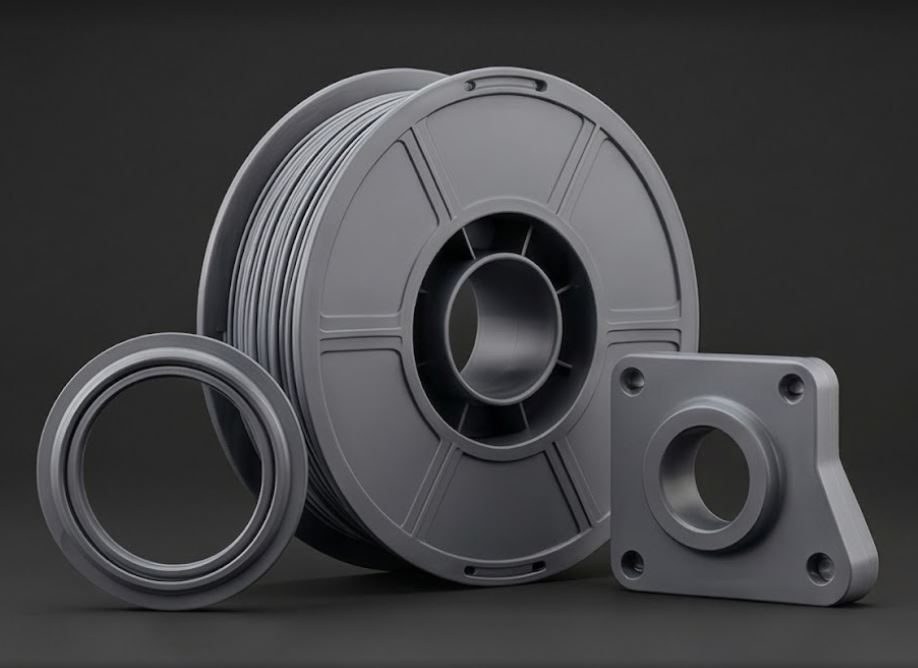
ASA - Acrylonitrile Styrene Acrylate
ABS-like material with strong UV/weather resistance for outdoor use.
ASA offers mechanical behavior similar to ABS with improved UV and weather resistance. Properties: - Prints roughly like ABS (high nozzle and bed temperatures) - Better outdoor durability and color stability - Enclosure still recommended for consistent results Best for: outdoor brackets, covers, and weather-exposed parts. Related: ABS, Warping, Filament.
Open detail →Pros
- ✓Excellent UV resistance
- ✓Good outdoor durability
- ✓Strong mechanical properties
Cons
- ✗Enclosure recommended
- ✗Harder to print than PLA/PETG
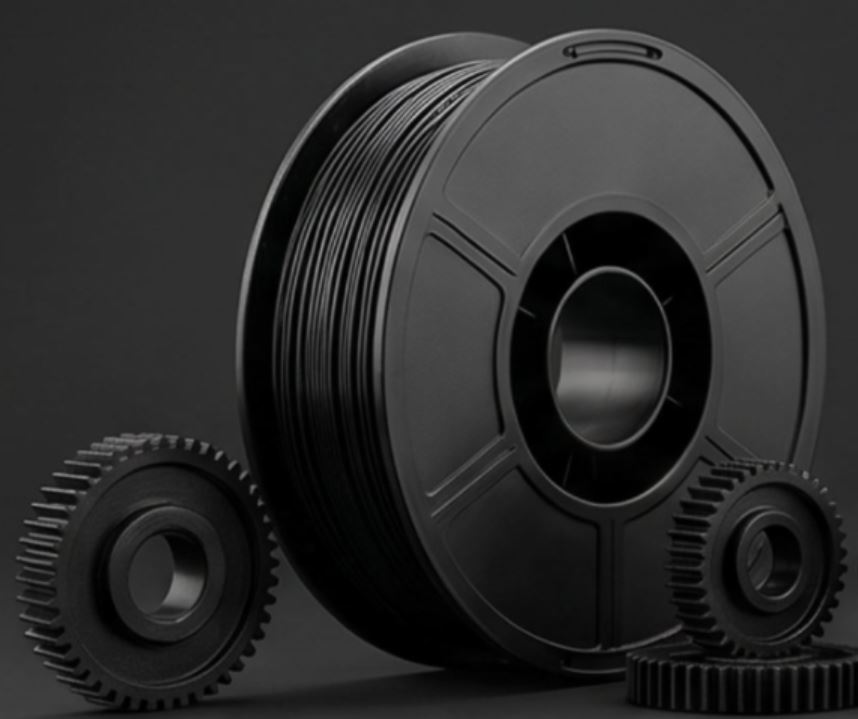
Nylon (PA) - Polyamide
Strong and durable engineering filament, but highly hygroscopic and moisture-sensitive.
Nylon (PA) is a high-performance engineering filament with excellent toughness. Properties: - Good strength, wear resistance, and chemical resistance - Often needs higher temperatures and controlled environment - Highly hygroscopic - dry before printing Best for: gears, hinges, load-bearing technical parts. Related: Wet Filament, Drybox, Filament.
Open detail →Pros
- ✓Excellent strength and toughness
- ✓Good wear resistance
- ✓Good chemical resistance
Cons
- ✗Very moisture-sensitive
- ✗Requires drying and controlled print conditions
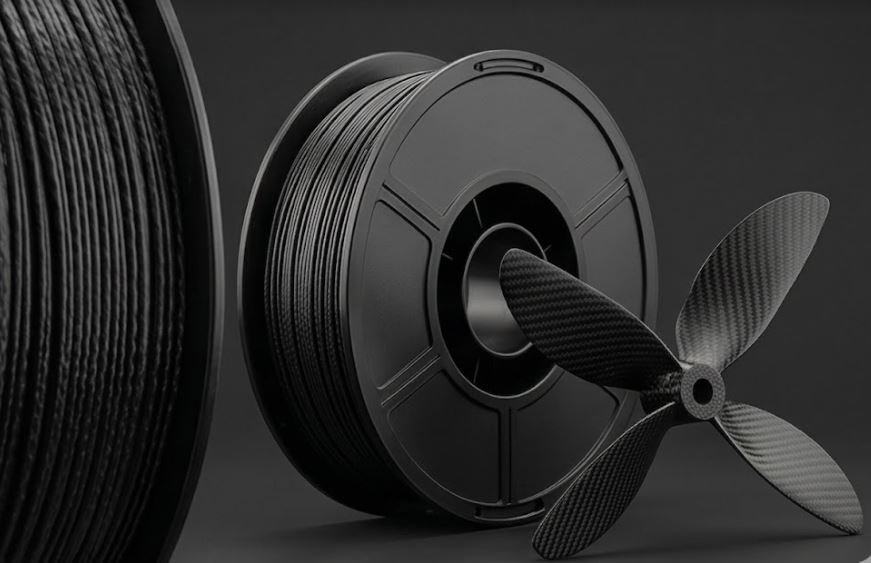
Carbon Fiber - Composite Filament
Maximum stiffness at low weight for demanding functional parts.
Carbon-fiber composites (most commonly PLA-CF, PETG-CF, PA-CF, or ABS-CF) include short carbon fibers that significantly increase stiffness and reduce weight. Properties: - High stiffness-to-weight ratio - Matte technical surface finish - Abrasive to standard brass nozzles; hardened steel nozzle recommended Best for: RC and drone parts, technical brackets, lightweight structural components. Related: Nylon, ABS, Hardened Nozzle, Filament.
Open detail →Pros
- ✓Excellent stiffness and strength at low weight
- ✓Professional matte surface finish
- ✓Great for technical and structural applications
Cons
- ✗Requires hardened steel nozzle due to abrasion
- ✗Higher cost and more limited color availability
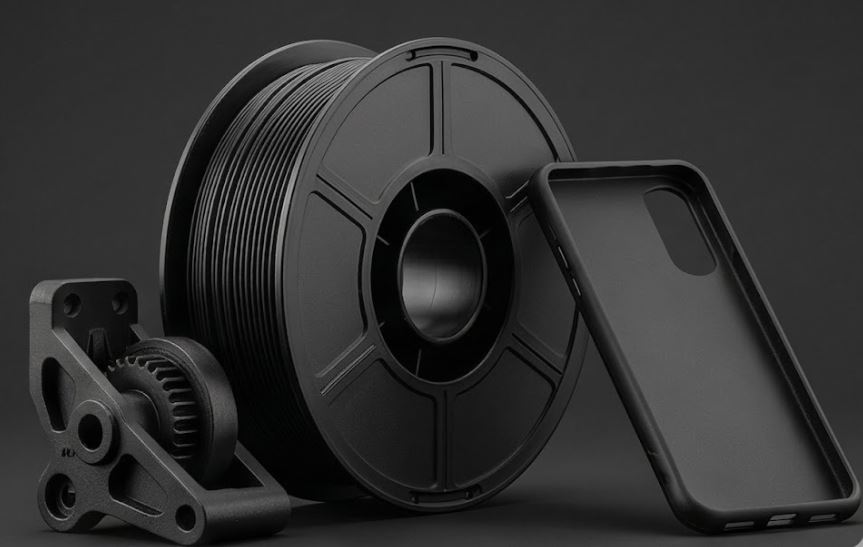
ABS - Acrylonitrile Butadiene Styrene
Strong, heat-resistant engineering plastic that usually needs an enclosure.
ABS is a classic engineering thermoplastic known for toughness and heat resistance. Properties: - Prints around 230-260 C nozzle, 90-110 C bed - Strong and durable for technical parts - Higher tendency to warping; enclosure strongly recommended Safety: - Use ventilation or filtration due to fumes during printing. Related: ASA, Warping, Filament.
Open detail →Pros
- ✓Strong and durable for technical parts
- ✓High heat resistance
- ✓Can be chemically smoothed with acetone
Cons
- ✗Higher tendency to warping
- ✗Requires ventilation due to fumes
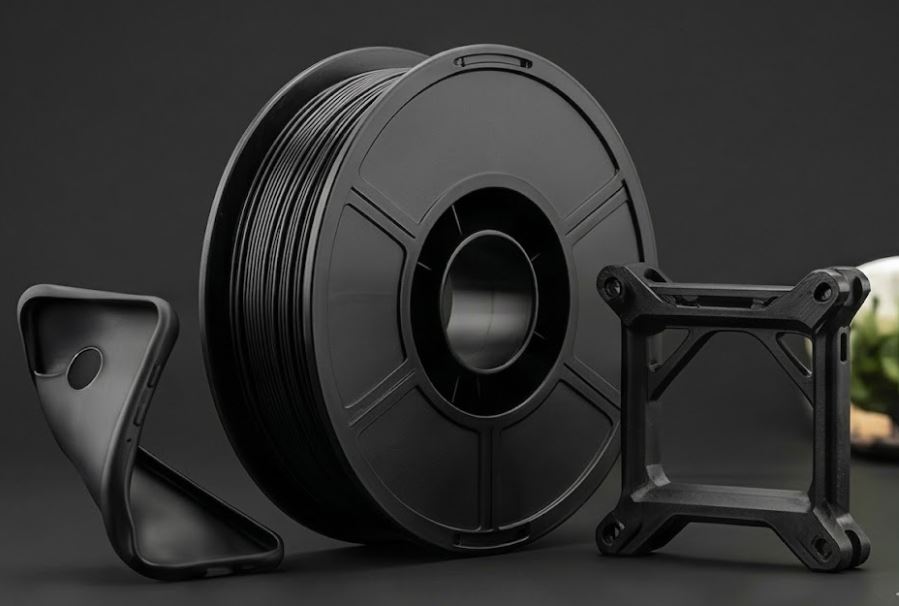
TPU - Thermoplastic Polyurethane
Flexible, rubber-like filament for elastic and impact-absorbing parts.
TPU is a flexible filament that behaves similarly to rubber after printing. Properties: - Prints around 210-240 C nozzle, low bed temperature - Flexible and abrasion resistant - Best with direct-drive extruders and lower print speeds Best for: phone cases, seals, feet, dampers, wearable parts. Related: Filament, Direct Drive, Bowden.
Open detail →Pros
- ✓High flexibility and abrasion resistance
- ✓Good impact damping
- ✓Useful for wearables and protective parts
Cons
- ✗Slower print speeds required
- ✗Works best with direct-drive extruders
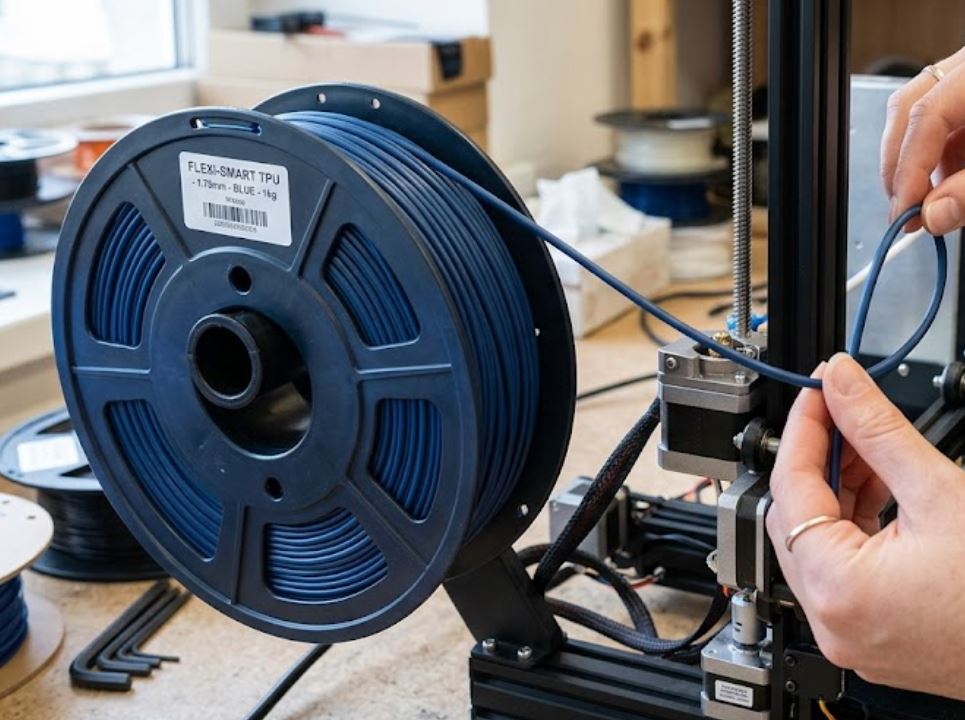
Flex - Flexible Filaments
Elastic materials for damping, grip, sealing, and wearable parts.
Flexible filament families (including TPU/TPE variants) provide different hardness levels for soft and elastic prints. Properties: - Wide hardness range depending on grade - Better results at lower print speeds - Direct-drive extruders typically perform best Best for: seals, grips, vibration dampers, protective accessories. Related: TPU, Direct Drive, Filament.
Open detail →Pros
- ✓Broad range of flexibility options
- ✓Good chemical and abrasion resistance for many grades
- ✓Excellent impact damping and grip properties
Cons
- ✗Requires slower print speeds
- ✗Can be challenging with Bowden setups
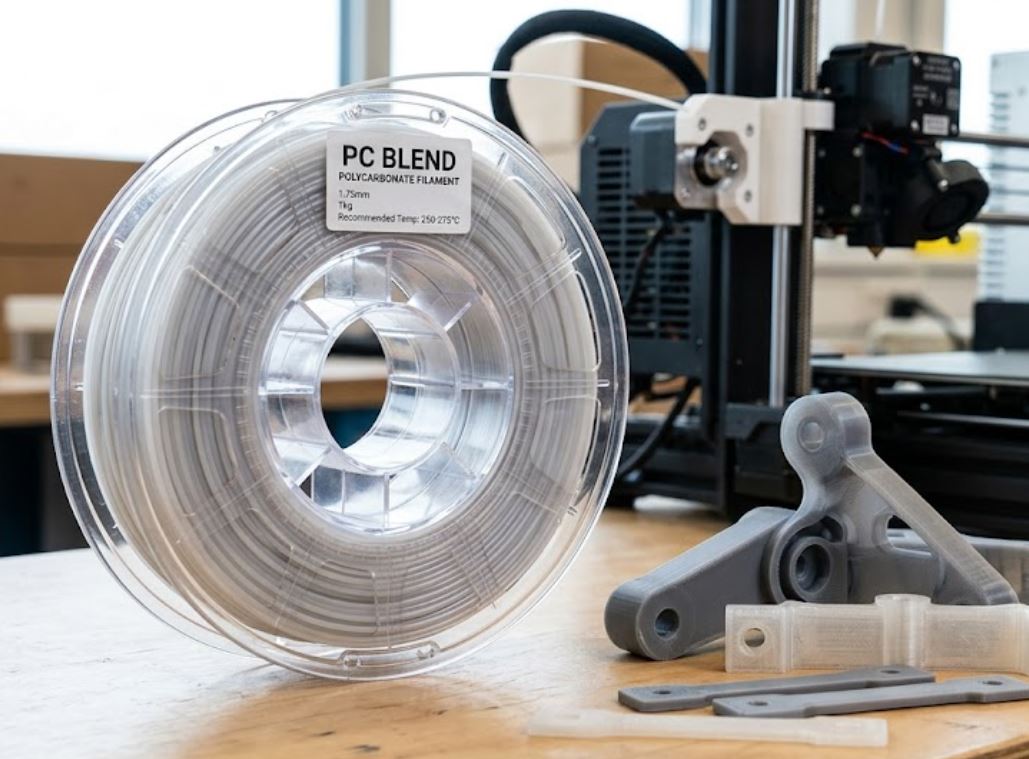
PC Blend - Polycarbonate
High-heat engineering material for parts beyond PLA and PETG limits.
Polycarbonate (PC) and PC blends offer high heat resistance, toughness, and dimensional stability for demanding environments. Properties: - Typical nozzle 260-300 C, bed 100-120 C - High thermal resistance and impact toughness - Strongly moisture-sensitive; dry filament before printing Best for: electronics housings, automotive interior parts, heat-exposed technical components. Related: ABS, Nylon, Drybox, Filament.
Open detail →Pros
- ✓Very high heat resistance compared to PLA/PETG
- ✓Strong and impact-tough for engineering parts
- ✓Reliable for long-term technical use when properly dried
Cons
- ✗Difficult printing profile with high temperatures
- ✗Requires filament drying and usually an enclosure