
PETG – Stronger Alternative to PLA
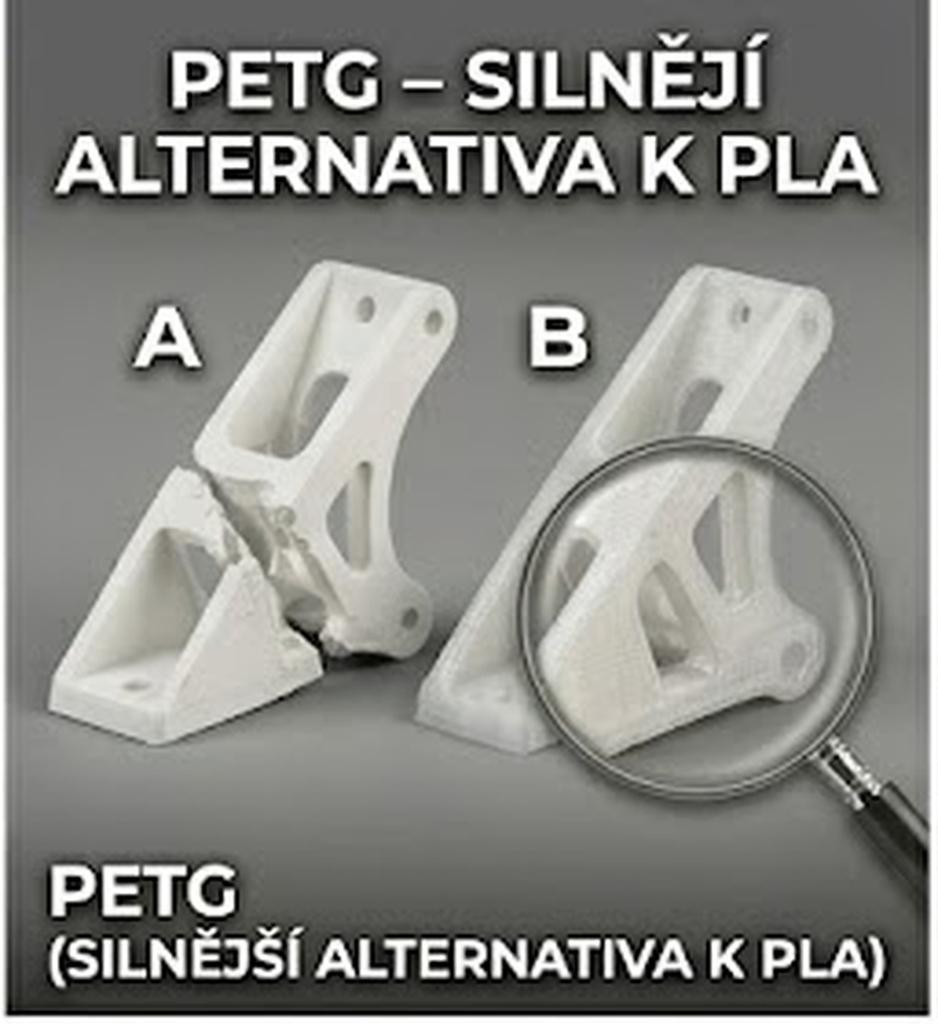
PETG (Polyethylene Terephthalate Glycol) is an excellent material for functional parts: ✅ Advantages: • Higher heat resistance than PLA (~80 °C) • Excellent chemical resistance • Good toughness and flexibility • Minimal shrinkage (no enclosure needed) • Food-safe grades available (without dyes and additives) ⚠️ Disadvantages: • More stringing than PLA • Sticks strongly to PEI – apply release agent • More moisture-sensitive than PLA • Worse bridging performance 🌡 Print settings: • Nozzle: 230–250 °C • Bed: 80–90 °C • Cooling: 50–70% (less than PLA) • Speed: 40–80 mm/s 💡 Tips: • Before printing on PEI, apply thin PVA layer (Magigoo, glue stick) • Increase retraction distance compared to PLA • Print slower for better surface • Great for: bottles, containers, functional parts in cars
PETG (Polyethylene Terephthalate Glycol) is an excellent material for functional parts:
✅ Advantages: • Higher heat resistance than PLA (~80 °C) • Excellent chemical resistance • Good toughness and flexibility • Minimal shrinkage (no enclosure needed) • Food-safe grades available (without dyes and additives)
⚠️ Disadvantages: • More stringing than PLA • Sticks strongly to PEI – apply release agent • More moisture-sensitive than PLA • Worse bridging performance
🌡 Print settings: • Nozzle: 230–250 °C • Bed: 80–90 °C • Cooling: 50–70% (less than PLA) • Speed: 40–80 mm/s
💡 Tips: • Before printing on PEI, apply thin PVA layer (Magigoo, glue stick) • Increase retraction distance compared to PLA • Print slower for better surface • Great for: bottles, containers, functional parts in cars