
Materials: PLA vs. PETG vs. ABS Comparison
Comparison of popular FDM materials: key properties, recommended temperatures and typical applications for each.
⏱ Estimated time: 10 min
Procedure
Material Properties
Every material has its advantages and disadvantages.
📊 Comparison of PLA, PETG, and ABS
Key Differences at a Glance
PLA = start | PETG = function | ABS = heat and industry
The three most common materials for FDM printing—each for a different purpose. You can find detailed information in Guide No. 2.
- PLA – Printing Difficulty
- See recommended range for this material.
- PETG – Printing Difficulty
- See recommended range for this material.
- ABS – Printing Difficulty
- See recommended range for this material.
- PLA – Heat Resistance
- ~131 - 140 °F
- PETG – Heat Resistance
- ~176 °F
- ABS – Heat Resistance
- ~212 °F
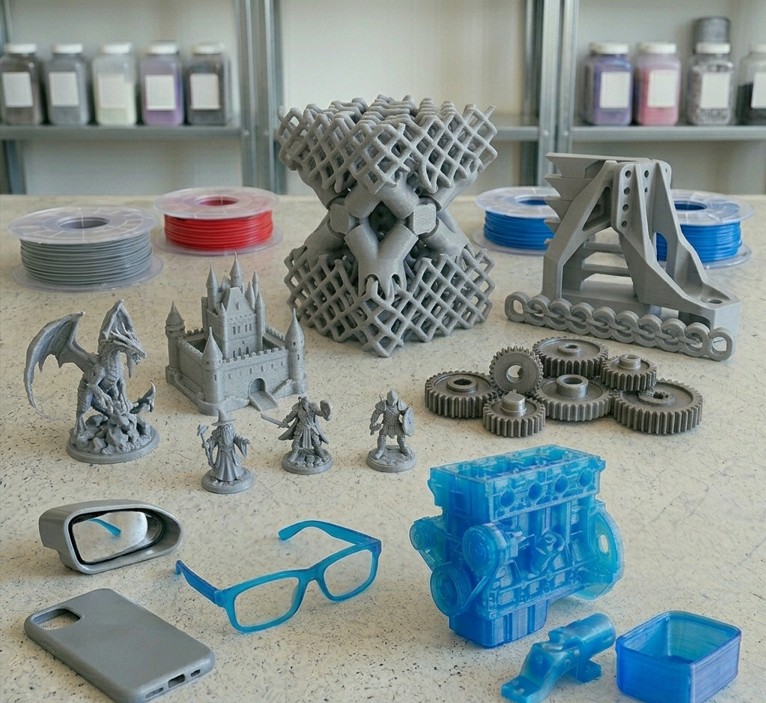
PLA - when to choose it: For 90% of cases: decorations, prototypes, organizers, figurines, school projects. The easiest material to start with.
PETG - when to choose it: Functional parts, consoles, boxes in warmer environments, containers, outdoor use in the shade.
ABS - when to choose it: Car parts, environment above 176 °F, acetone smoothing. You need an enclosure and good ventilation.
🧪 Special Materials
When to Switch from PLA, PETG, and ABS
TPU = Flexibility | ASA = UV resistance | Nylon = maximum strength
Three special materials for specific requirements.
TPU (flexible): Phone cases, seals, protectors, vibration dampers. It needs a Direct Drive extruder and a slow speed (0.6-1.6in/s).
ASA (outdoor): Instead of ABS for outdoor use. Same heat resistance, but withstands UV without degradation. It also needs an enclosure.
Nylon (PA) Gears, industrial parts, sports equipment. The highest strength of all common filaments, but extremely hygroscopic.